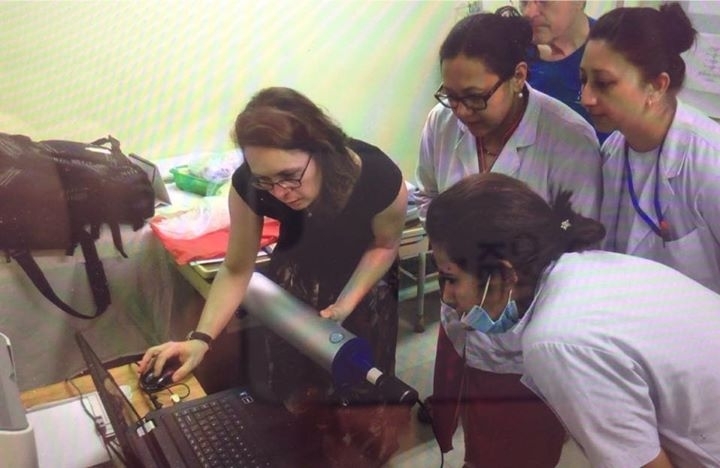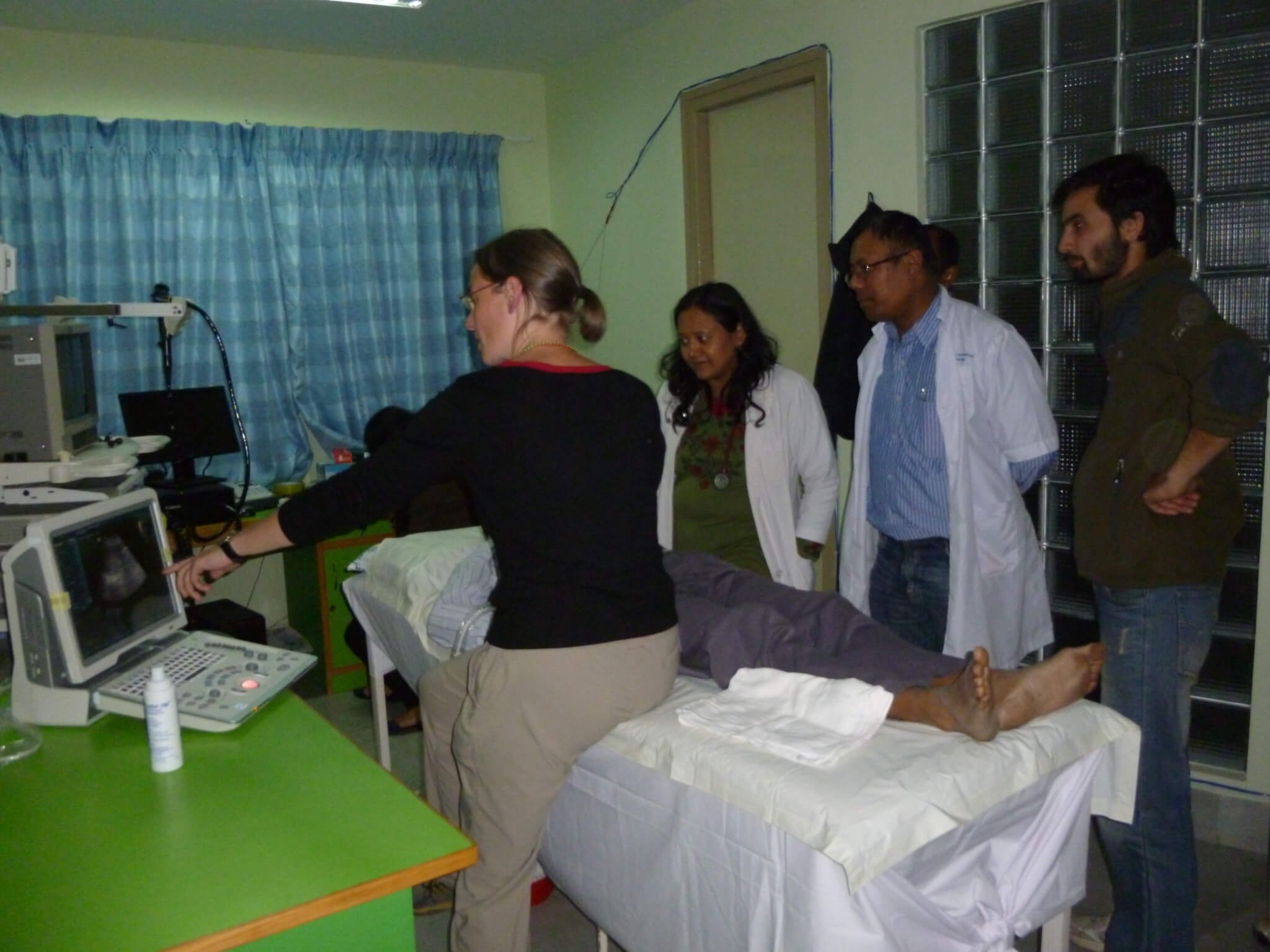


🇩🇪 Am 12. Oktober haben wir ein Samsung HS40 an das Sangla Primary Health Care Centre in Tarkeshwor übergeben, am Rand des Kathmandu-Tals. Für Schwangere ist Ultraschall dort eine unverzichtbare Diagnosemöglichkeit. Doch Geräte fallen oft aus. Deshalb setzen wir uns für verlässliche Technik ein.
Eine Spendenaktion hat diese Übergabe möglich gemacht. Die Stiftung Nord-Süd-Brücken hat das Projekt ebenfalls unterstützt. 💙
Bei der Zeremonie sprachen der Bürgermeister und das medizinische Personal darüber, was das Gerät für die Patientinnen und Patienten bedeutet. 12 von uns waren dabei, darunter Dr. Arne Drews, und bekamen eine Führung durchs Krankenhaus.
Danke an Babu Ram Giri, der Gerätelieferungen und Gesundheitsprojekte vor Ort gemeinsam mit uns koordiniert. Danke an das ganze Krankenhausteam und alle Gäste. 🙏
Sie möchten unsere Arbeit in Nepal unterstützen? Mehr dazu auf nepalmed.de.
–
🇬🇧 New ultrasound device for pregnant women in Sangla 🇳🇵
On 12 October, we handed over a Samsung HS40 to the Sangla Primary Health Care Center in Tarkeshwor, on the edge of the Kathmandu Valley. For pregnant women there, ultrasound is an indispensable way to diagnose. Yet devices often fail. That is why we push for reliable equipment.
A fundraising campaign made this handover possible. Foundation Nord-Süd-Brücken supported the project as well. 💙
At the ceremony, the mayor and the medical staff spoke about what the device means for patients. 12 of us joined, among them Dr. Arne Drews, and got a tour of the hospital.
Thank you to Babu Ram Giri, who coordinates equipment deliveries and health projects on site with us. Thank you to the whole hospital team and all guests. 🙏
Would you like to support our work in Nepal? Find out more at nepalmed.de.
#stiftungnordsüdbrücke

🇩🇪 Fischer-Art ist zurück in Kirtipur! 🎨
Der Leipziger Künstler Michael Fischer-Art hat die Kinderstation im Kirtipur Hospital noch bunter gemacht. Schon 2022 hat er sie mit leuchtenden Farben und fröhlichen Figuren gestaltet. Jetzt sind viele neue Motive dazugekommen. Den Ausbau der Kinderstation hat die Nepalmed Stiftung finanziert.
Für Kinder ist ein Aufenthalt im Krankenhaus oft beängstigend. Diese Bilder laden zum Staunen, Entdecken und Lächeln ein. 🌈 Wir hoffen, dass sie allen kleinen Patientinnen und Patienten Freude machen und sie schnell wieder gesund werden.
Michael ist Kuratoriumsmitglied der Nepalmed Stiftung und setzt sich mit ganzem Herzen für unsere Projekte in Nepal ein. Danke, Michael! 💛
—
🇬🇧 Fischer-Art is back in Kirtipur! 🎨
Leipzig artist Michael Fischer-Art has made the children's ward at Kirtipur Hospital even more colourful. He first designed it in 2022 with bright colours and cheerful figures. Now many new motifs have joined them. The Nepalmed Foundation financed the expansion of the ward.
For children, a hospital can be frightening. These pictures invite them to marvel, explore and smile. 🌈 We hope they bring joy to all the young patients and help them get well soon.
Michael is a member of the Nepalmed Foundation's board of trustees and works wholeheartedly for our projects in Nepal. Thank you, Michael! 💛
Michael Fischer-Art 👍🏻
🇩🇪 Happy Dashain! 🪁 Wir wünschen allen unseren nepalesischen Partnerinnen und Partnern ein frohes Dashain-Fest!
Möge diese besondere Zeit euch Glück, Gesundheit und Erfolg bringen. Wir wünschen euch schöne Stunden mit Familie und Freunden, viel Segen durch Tika und Jamara und Drachen, die hoch in den Himmel steigen.
Danke für die wunderbare Zusammenarbeit, wir freuen uns auf alles, was noch kommt!
Euer Nepalmed-Team
🙏🏻 Wir durften das Bild aus Michaels Skizzenbuch mopsen. Michael Fischer-Art
–
🇬🇧 Happy Dashain! 🪁 We wish all our Nepali partners and friends a joyful Dashain!
May this special season bring you happiness, good health and success. We hope you enjoy precious time with family and friends, receive many blessings with tika and jamara, and fly your kites high into the sky.
Thank you for the wonderful cooperation, we look forward to everything still to come!
Your team of Nepalmed
🙏🏻 We were allowed to pinch the picture from Michael’s sketchbook.